

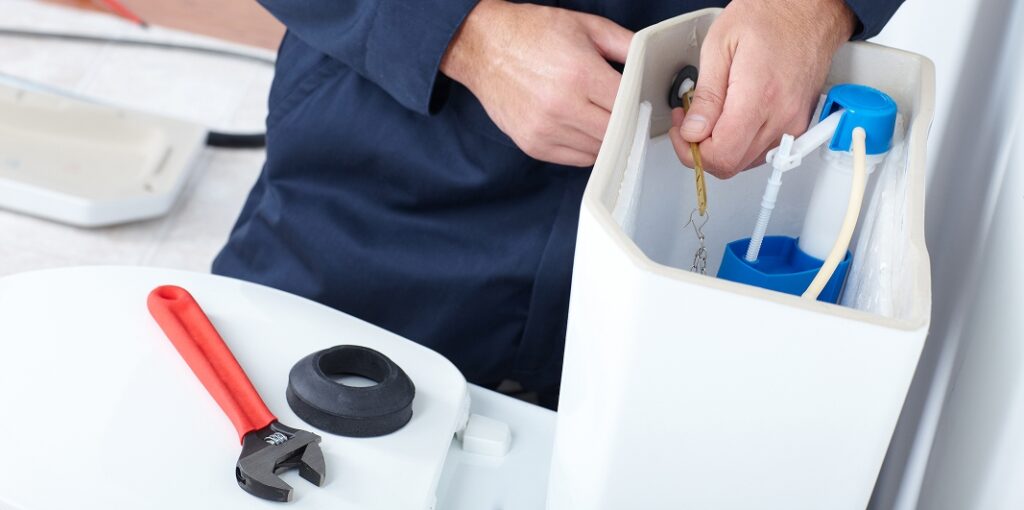
A toilet is one of the most frequently used fixtures in your home, so even a small problem can quickly become a major inconvenience. A handle that needs to be jiggled, a bowl that drains slowly, or a toilet that runs long after every flush may seem harmless at first. Left unresolved, however, toilet problems can waste water, increase utility costs, damage flooring, or signal a deeper issue in your plumbing system.
Some simple problems have simple solutions. Others require the tools and experience of a licensed plumber. Here are seven signs it may be time to schedule professional toilet repair.
1. Your Toilet Keeps Running
A toilet that continues running after the tank has refilled is more than an irritating background noise. It is also wasting water. Common causes include a worn flapper, a faulty fill valve, an incorrect float setting, or a problem with the flush mechanism.
You can look inside the tank to see whether the flapper is sealing properly or whether the chain is tangled. If the problem continues after a basic adjustment, a plumber can identify the failed component and make the correct repair.
2. The Toilet Clogs Frequently
An occasional clog may happen when too much toilet paper is flushed. Repeated clogs are different. They may be caused by an obstruction in the toilet trap, a problem farther down the drain line, low flushing power, or an aging toilet that no longer performs effectively.
Avoid repeatedly using chemical drain cleaners, which may not solve the underlying issue and can be hard on plumbing components. If plunging provides only temporary relief, or more than one drain is backing up, professional diagnosis is the safer next step.
3. The Toilet Is Leaking at the Base
Water around the bottom of a toilet may indicate a failed wax ring, loose mounting hardware, a cracked fixture, or condensation. Because water can seep beneath the flooring, a base leak should be addressed promptly. Hidden moisture can damage the subfloor and create conditions for mold growth.
Stop using the toilet if the leak is active. Wipe up the water, shut off the fixture’s supply valve if necessary, and arrange for service.
4. The Toilet Rocks or Moves
A toilet should feel stable when you sit down. Rocking may mean the mounting bolts are loose, the floor is uneven, or moisture has weakened the subfloor. Simply tightening the bolts is not always the right fix; overtightening can crack the porcelain.
A plumber can determine whether the toilet needs to be reset and check for damage around the flange, seal, and floor.
5. The Flush Is Weak or Incomplete
If you need to hold down the handle or flush more than once, the problem could involve the water level, rim jets, flapper, drain line, or internal tank components. Mineral buildup can also restrict water flow and reduce flushing performance.
A professional inspection can determine whether a repair will restore dependable operation or whether replacing an older, inefficient toilet is the better long-term choice.
6. You Hear Gurgling or Notice Other Drains Backing Up
Gurgling sounds can indicate trapped air or a blockage in the drain or vent system. If flushing the toilet causes water to rise in a tub or shower, or if several fixtures drain slowly, the issue may extend beyond the toilet itself.
Stop using affected fixtures and call a plumber. Continuing to flush could lead to a wastewater backup.
7. The Porcelain Is Cracked
A visible crack in the tank or bowl should never be ignored. Even a hairline crack can spread and release water without warning. Depending on its location and severity, replacement is often safer than repair.
If you notice moisture on the outside of the toilet, dry the surface and watch for water returning. Shut off the supply and schedule an inspection if you suspect a crack.
When Is a DIY Toilet Repair Reasonable?
Homeowners can often try a few low-risk steps first:
- Use a flange-style toilet plunger for a minor, isolated clog.
- Make sure the tank chain is connected and moves freely.
- Check that the toilet’s water-supply valve is fully open.
- Look for an obviously misaligned flapper inside the tank.
Stop if the toilet leaks, rocks, repeatedly clogs, or affects other drains. Also avoid forcing components, overtightening bolts, or repeatedly flushing a clogged bowl. A quick professional repair can help prevent a small issue from turning into water damage or a more extensive plumbing problem.
Should You Repair or Replace the Toilet?
Repair is often appropriate when the toilet is in good condition and the problem involves a replaceable internal part. Replacement may make more sense when the porcelain is cracked, repairs are becoming frequent, the toilet uses excessive water, or its flushing performance remains poor.
A licensed plumber can inspect the fixture, explain the available options, and help you compare the cost and expected life of repair versus replacement.
Reliable Toilet Repair for Connecticut Homeowners
When a toilet problem disrupts your home, Griswold Plumbing Services is ready to help. Our licensed and insured plumbers repair toilet and pipe issues and can replace the fixture when that is the better solution. As a family-owned and operated Connecticut company, we provide straightforward recommendations, transparent pricing, and dependable workmanship backed by a one-year warranty on parts and services.
Griswold Plumbing Services serves homeowners in Westbrook, throughout Middlesex County, the Connecticut shoreline, and surrounding communities. Call (860) 864-5001 or request a service appointment today.