

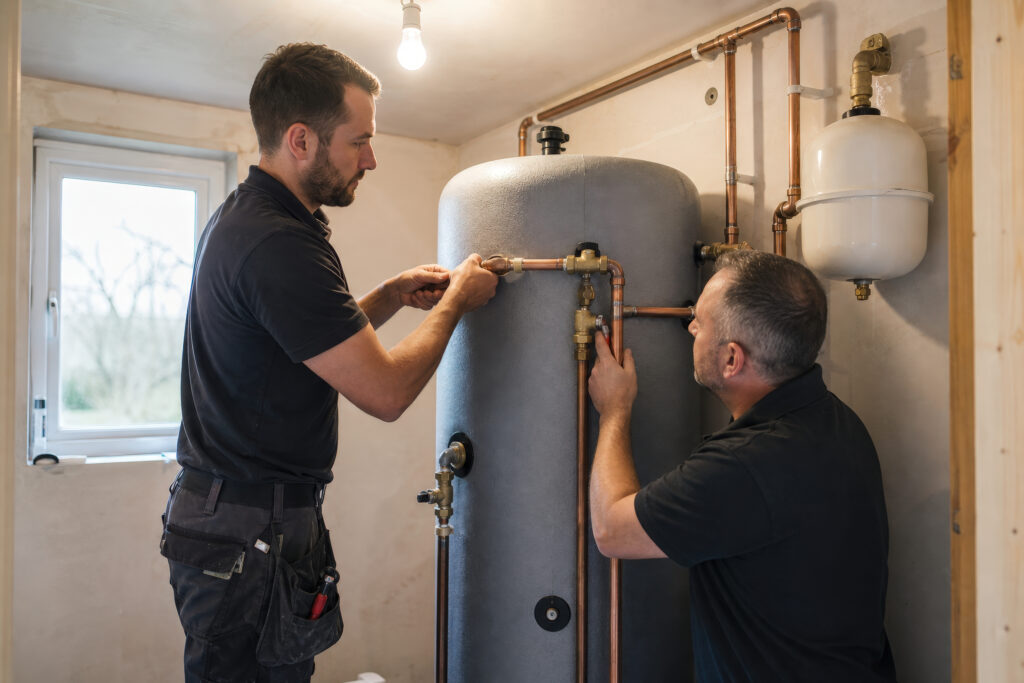
Your water heater works quietly in the background every day, providing hot water for showers, laundry, dishes, and cleaning. Because it is easy to overlook, many homeowners do not think about replacing it until the hot water stops or a leaking tank causes damage.
Recognizing a problem early gives you more time to make an informed decision. If you have already noticed fluctuating temperatures, unusual noises, rusty water, leaks, or a reduced hot-water supply, review our guide to the top five warning signs your water heater needs repair. The next question is whether repairing the unit still makes sense or whether replacement is the better long-term choice.
When Should You Replace a Water Heater?
Not every water heater problem means you need a new unit. A faulty thermostat, heating element, valve, or other replaceable component may be repairable. However, replacement often makes more sense when the tank is leaking, the unit is badly corroded, repairs are becoming frequent, or the water heater is nearing the end of its expected service life.
Traditional tank water heaters commonly last about 8 to 12 years. That range is only a general guide. Water quality, maintenance, installation, household demand, and the design of the system can all affect how long a particular unit lasts.
When deciding between repair and replacement, consider:
- The water heater’s age and overall condition
- The source and severity of the current problem
- The frequency and cost of previous repairs
- Whether the tank shows corrosion or is leaking
- Whether the unit meets your household’s hot-water needs
- Its current energy efficiency
A professional evaluation can help determine whether a repair will provide dependable service or simply delay an inevitable replacement.
Why Consider Replacement Before the Unit Fails?
Waiting until a water heater stops working may leave your household without hot water and force you to make a quick decision. A leaking tank can also damage floors, walls, stored belongings, and nearby equipment.
Planning a replacement before a complete failure provides several advantages. You have time to compare equipment, choose the appropriate size and fuel type, understand the installation requirements, and schedule the work. A newer water heater may also provide more reliable performance and better energy efficiency than an older unit.
Choosing the Right Type of Water Heater
The best replacement is not necessarily an identical version of the old unit. Your household size, hot-water habits, available fuel, installation space, and budget should all influence the decision.
Griswold Plumbing Services installs conventional and tankless water heaters, as well as electric, natural gas or propane power-vented, indirect, and oil-fired systems.
Conventional Storage-Tank Water Heaters
Storage-tank models keep a set amount of hot water ready for use. They are familiar, widely available, and often cost less to install than tankless systems. Selecting the proper tank capacity and recovery rate is important, especially for households that use several hot-water fixtures or appliances close together.
Tankless Water Heaters
Tankless systems heat water as it is needed instead of storing it in a tank. They can conserve space and eliminate standby heat loss, but they generally have a higher initial installation cost. Some homes also need gas-line, venting, electrical, or other modifications to support a tankless unit.
A tankless water heater must be sized for the home’s expected flow rate. A system that is too small may struggle when showers, sinks, and appliances are used simultaneously. This is why tankless equipment should be selected according to the household’s actual demand rather than by appearance or price alone.
Proper Sizing Matters
Replacing a water heater is an opportunity to confirm that the system is properly sized. An undersized unit can leave family members waiting for hot water. An unnecessarily large unit may cost more to purchase and operate.
A plumber may consider:
- The number of people living in the home
- Peak demand during mornings and evenings
- How often showers, laundry, and dishwashing overlap
- The number and type of plumbing fixtures
- Available gas, oil, or electrical capacity
- Existing venting and installation space
- Possible future changes in household demand
The right system should balance comfort, efficiency, installation requirements, and budget.
How Connecticut Water Conditions Can Affect Your Water Heater
Water quality can play an important role in water-heater performance. Minerals and sediment may collect at the bottom of a tank over time, making the unit work harder and reducing the amount of usable hot water. Certain well-water conditions may also contribute to odor, discoloration, scale, or corrosion.
Connecticut homes with private wells may experience hard water, iron, sulfur, sediment, or other water-quality concerns. If the old water heater contains significant mineral buildup or has had recurring odor and discoloration problems, replacement is a good time to look beyond the appliance itself. Water testing or treatment may help protect the new equipment and improve water quality throughout the home.
What Happens During a Professional Water Heater Replacement?
A professional replacement begins with an assessment of the existing equipment and household needs. The plumber should confirm the fuel or power source, water connections, venting, available space, and any installation or code requirements before recommending a unit.
The replacement process generally includes:
- Shutting down and disconnecting the existing water heater
- Draining and removing the old unit
- Positioning and connecting the new water heater
- Completing any necessary plumbing, gas, electrical, or venting work
- Checking safety components and testing for leaks
- Starting the new system and confirming proper operation
- Explaining basic operation and maintenance to the homeowner
Water-heater installation can involve pressurized water, electricity, fuel gas, combustion venting, and temperature-and-pressure safety controls. Using a licensed and insured plumbing professional helps ensure those parts of the installation are handled correctly.
Frequently Asked Questions About Water Heater Replacement
Does a leaking water heater always need to be replaced?
It depends on where the leak originates. A leaking fitting or replaceable component may be repairable. Water pooling around the bottom of the unit, however, can indicate that the internal tank has failed. A cracked or leaking tank generally requires replacement.
Is it better to repair or replace an older water heater?
The answer depends on the unit’s age, condition, repair history, and the nature of the problem. A minor repair may be reasonable on a sound system. Replacement may offer better value when an older unit is corroded, inefficient, leaking, or requiring repeated service.
Should I switch to a tankless water heater?
Tankless equipment can be a good option for some households, particularly when space or on-demand operation is important. However, installation costs, available fuel, required flow rate, gas-line capacity, and venting must be evaluated first. It is not automatically the best choice for every home.
Can well water shorten the life of a water heater?
Sediment, scale, iron, sulfur, and other water conditions can affect performance and contribute to buildup or corrosion. Proper maintenance and an appropriate water-treatment solution may help protect plumbing fixtures and water-using equipment.
How do I know what size water heater I need?
Sizing should be based on peak hot-water demand, not only the number of people in the home. A plumber can evaluate typical simultaneous use, fixture flow rates, tank recovery, and the home’s available utilities to recommend an appropriate system.
Plan Your Water Heater Replacement With Griswold Plumbing Services
If your water heater is aging, leaking, or requiring frequent repairs, you do not have to wait for a complete breakdown. Griswold Plumbing Services can evaluate your existing system and help you choose a replacement suited to your Connecticut home, hot-water needs, and budget.
Call (860) 864-5001 or request a service appointment online to get started.